

A Clear Framework for Choosing the Right Bottling Line for Your Operation
One of the most common decisions bottled water businesses face is whether to invest in a manual or automatic 5-gallon bottling line. At first glance, manual systems often appear more affordable, while automatic systems seem expensive. However, upfront cost alone rarely tells the full story.
This comparison breaks down true cost vs operational efficiency so you can make a decision that supports long-term profitability rather than short-term savings.
Step 1: Understanding the Difference Between Manual and Automatic Bottling Lines
Manual 5-Gallon Bottling Lines
Manual bottling lines rely heavily on operator involvement at every stage.
Typical characteristics include:
- Manual bottle loading and unloading
- Operator-controlled washing, filling, and capping steps
- Lower initial equipment cost
- Slower and less consistent throughput
Manual systems are often used by very small operations or startups with limited volume.
Automatic 5-Gallon Bottling Lines
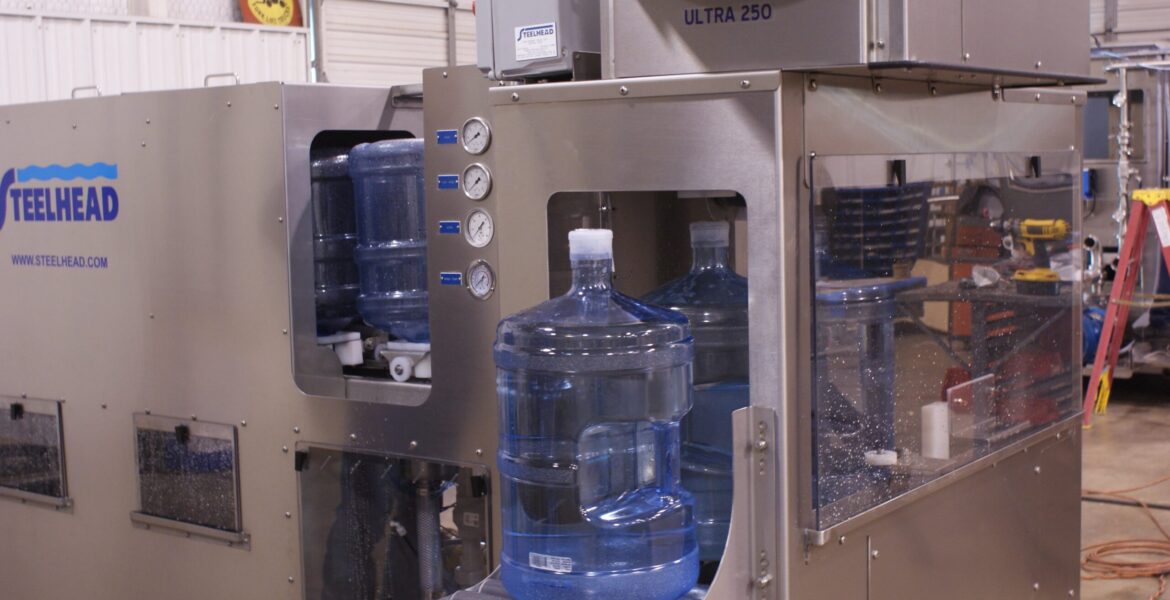
Automatic bottling lines integrate washing, filling, and capping into a controlled, repeatable process.
Typical characteristics include:
- Automated wash, fill, and cap cycles
- Single-operator or low-labor workflows
- Higher production capacity
- Consistent sanitation and output
Automatic systems are designed for efficiency, scalability, and compliance.
Step 2: Comparing Upfront Cost vs True Operating Cost
Upfront Equipment Cost
Manual systems typically require less initial investment. This can be appealing for new businesses or those testing the market.
Automatic systems require a higher upfront investment due to automation, controls, and sanitation features.
However, equipment cost is only one part of the equation.
Labor Cost Over Time
Labor is the largest long-term cost difference between manual and automatic lines.
Manual bottling lines:
- Require multiple operators per shift
- Increase labor hours as volume grows
- Create variability in output and quality
Automatic bottling lines:
- Often operate with a single operator
- Increase output without increasing staffing
- Reduce fatigue and human error
Over time, labor savings often outweigh the higher initial cost of automation.
Step 3: Throughput and Efficiency Comparison
Manual Line Efficiency
Manual lines typically produce:
- Lower bottles per hour
- Inconsistent output due to operator variability
- Longer production shifts to meet demand
As demand increases, manual lines quickly become bottlenecks.
Automatic Line Efficiency
Automatic lines deliver:
- Predictable bottles per hour
- Consistent cycle timing
- Shorter production shifts
- Greater ability to absorb demand spikes
Higher efficiency reduces cost per bottle and improves delivery reliability.
Step 4: Sanitation and Compliance Considerations
Sanitation is critical in 5-gallon bottling operations.
Manual bottling lines often rely on:
- Operator-dependent cleaning
- Inconsistent wash cycles
- Higher risk of cross-contamination
Automatic bottling lines incorporate:
- Multi-stage automated wash cycles
- Ozonated sanitizing rinses
- Non-contact filling
- Controlled fill environments
For operations subject to regular inspections, automated sanitation provides a significant compliance advantage.
Step 5: Reliability and Downtime
Manual systems tend to experience:
- More frequent stoppages
- Greater wear from inconsistent operation
- Higher dependence on operator skill
Automatic systems are designed for:
- Continuous-duty operation
- Industrial-grade components
- Predictable maintenance schedules
Reduced downtime directly improves productivity and customer satisfaction.
Step 6: Scalability and Growth Planning
A key limitation of manual bottling lines is scalability.
Manual systems:
- Reach capacity quickly
- Require additional labor to increase output
- Often need full replacement as the business grows
Automatic systems:
- Offer higher capacity within the same footprint
- Support growth without proportional labor increases
- Provide better long-term return on investment
Planning for growth favors automation in nearly all scenarios.
Step 7: Cost Per Bottle Comparison
When evaluating total cost of ownership, consider:
- Equipment amortization
- Labor cost per bottle
- Downtime and maintenance
- Sanitation and compliance risk
Automatic bottling lines consistently deliver a lower cost per bottle once production volume reaches moderate levels.
Which Option Is Right for Your Business?
Manual Bottling Lines May Be Suitable If:
- Production volume is very low
- Growth expectations are minimal
- Labor is readily available and inexpensive
- Regulatory requirements are limited
Automatic Bottling Lines Are the Better Choice If:
- You plan to grow production
- Labor costs are a concern
- Consistency and sanitation are critical
- You want predictable output and scalability
For most commercial bottling operations, automatic systems provide stronger long-term economics.
How Steelhead Helps Bottlers Make the Right Choice
Steelhead, Inc. works with bottlers to evaluate whether manual or automatic systems make sense based on production goals, facility constraints, and growth plans.
Steelhead focuses on:
- Matching capacity to real demand
- Reducing labor dependency
- Ensuring sanitation and compliance
- Supporting scalable growth
Steelhead’s automatic 5-gallon bottling systems are engineered to deliver efficiency without unnecessary complexity.
Make a Smart Investment in Your Bottling Operation
Choosing between manual and automatic 5-gallon bottling lines is a decision that impacts cost, efficiency, and growth for years to come.
If you are weighing your options, Steelhead, Inc. can help you evaluate true cost versus efficiency and select a system that supports your long-term success.Call 866-303-3628 or visit steelheadinc.com to speak with a bottling system expert and get guidance tailored to your operation