

A Buyer’s Framework for Reducing Labor Without Sacrificing Throughput
Labor availability and cost are two of the biggest challenges facing bottled water producers today. For many operations, the most effective way to control labor costs is to invest in a single-operator bottling line.
However, not all systems marketed as single-operator truly deliver consistent, high-volume production with one person. This guide outlines what to look for in a single-operator bottling line so you can choose a system that performs as promised.
Step 1: True Single-Operator Workflow
The first question buyers should ask is whether the system can actually run with one operator during normal production.
A true single-operator bottling line should allow one person to:
- Load bottles
- Monitor wash, fill, and cap cycles
- Unload finished bottles
- Respond to alerts without stopping production
Systems that require frequent intervention, manual transfers, or constant adjustments are not truly single-operator, even if they are marketed that way.
Step 2: Integrated Washing, Filling, and Capping
Single-operator efficiency depends on automation. Key processes must be integrated into a single, controlled sequence.
Look for systems that include:
- Automated multi-stage bottle washing
- Automated filling with non-contact design
- Integrated cap sorting and application
Separating these processes across multiple machines often increases labor requirements and slows throughput.
Step 3: Consistent and Predictable Cycle Times
To operate efficiently with one person, the bottling line must deliver consistent cycle timing.
Important considerations include:
- Fixed wash, fill, and cap durations
- Minimal variation between cycles
- Stable throughput regardless of operator experience
Predictable cycle times allow operators to manage loading and unloading without rushing or bottlenecks.
Step 4: Ergonomic Bottle Handling
Bottle handling is one of the most physically demanding aspects of 5-gallon bottling. Poor ergonomics quickly lead to fatigue and reduced efficiency.
Evaluate whether the system supports:
- Easy bottle loading and unloading
- Minimal lifting or awkward positioning
- Optional automation for higher volumes
Ergonomic design is essential for maintaining single-operator productivity over full shifts.
Step 5: Sanitation and Controlled Fill Environment
Single-operator systems must maintain sanitation without relying on constant manual cleaning or adjustment.
Key sanitation features include:
- Automated, repeatable wash cycles
- Ozonated sanitizing rinse
- Non-contact filling to prevent cross-contamination
- Pressurized fill environment with filtered air
These features reduce operator workload while maintaining consistent sanitation standards.
Step 6: Controls, Alerts, and Ease of Operation
A single operator cannot constantly monitor every part of the system. The control interface must provide clear visibility and alerts.
Look for:
- PLC-based control systems
- Touchscreen HMI with clear status indicators
- Automated alarms for faults or out-of-range conditions
- Simple start-up and shutdown procedures
Intuitive controls allow one operator to manage the entire process confidently.
Step 7: Reliability and Uptime
Single-operator systems place greater importance on reliability. Frequent stoppages immediately disrupt production when staffing is limited.
Evaluate:
- Build quality and materials
- Industrial-grade components
- Proven performance in similar operations
- Ease of maintenance and access
Reliable equipment ensures that one operator can maintain steady output without constant troubleshooting.
Step 8: Capacity and Scalability
Not all single-operator systems offer the same capacity. Buyers should ensure the system supports current and future production needs.
Consider:
- Bottles per hour rating under real conditions
- Ability to maintain single-operator workflow at higher speeds
- Upgrade paths for increased capacity or automation
Choosing a system with headroom prevents the need for early replacement.
Step 9: Supplier Expertise and Support
A single-operator bottling line is only as effective as the support behind it.
Buyers should evaluate:
- Manufacturer experience with bottling operations
- Engineering and layout support
- Installation and commissioning assistance
- Long-term technical support
Working with an experienced supplier reduces risk and ensures the system performs as expected.
How Steelhead Designs True Single-Operator Bottling Lines
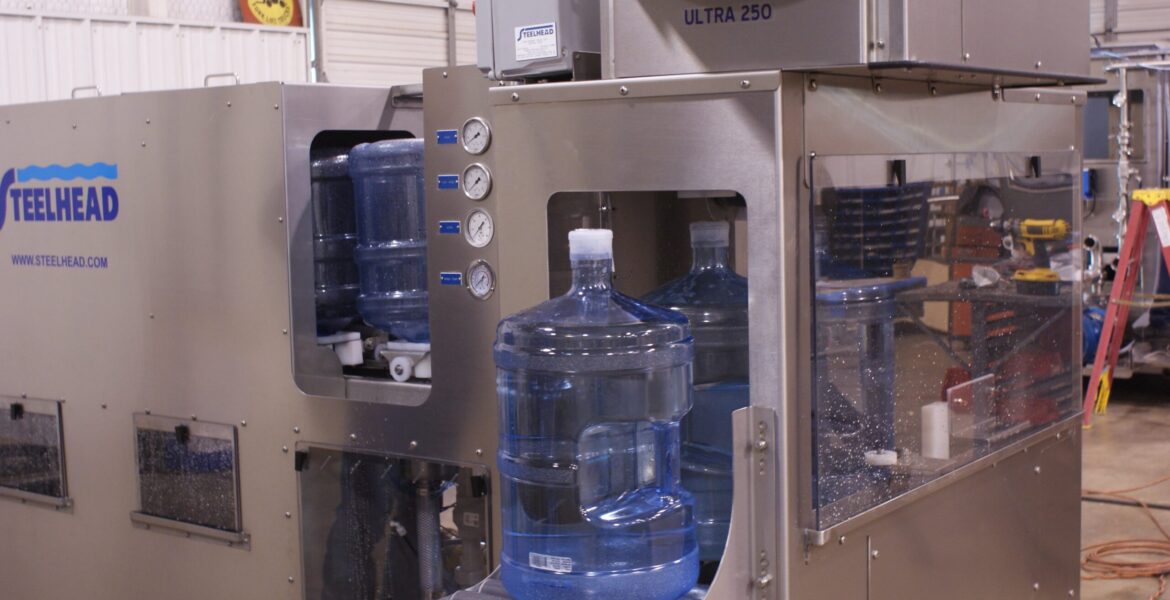
Steelhead, Inc. designs bottling systems specifically to support true single-operator operation without compromising sanitation or throughput.
Steelhead systems focus on:
- Integrated wash, fill, and cap processes
- Predictable, automated cycle timing
- Ergonomic layouts for bottle handling
- NSF-certified sanitation design
- Industrial-grade reliability
This engineering-first approach allows bottlers to increase output while controlling labor costs.
Choose a Single-Operator Bottling Line with Confidence
A true single-operator bottling line can significantly reduce labor dependency, improve consistency, and support long-term growth. The key is selecting a system designed to deliver these benefits in real-world operation.
If you are evaluating single-operator bottling lines, Steelhead, Inc. can help you select and configure a system that fits your production goals and facility constraints.Call 866-303-3628 or visit steelheadinc.com to speak with a bottling system expert and get guidance tailored to your operation.